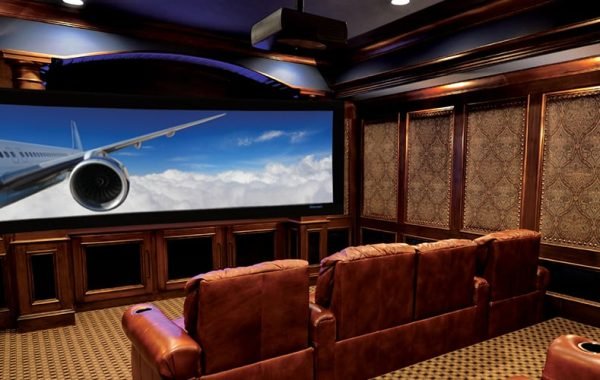

Home cinema rooms have become one of the biggest lifestyle upgrades in modern homes. Families want a space that delivers the emotion, drama, and immersion of a real theater—right inside their house. But a true cinematic experience is not created by just a projector, speakers, and recliners.
Real immersion begins when the room reacts to your mood, adjusts automatically based on what you’re watching, and transforms itself into a personalized mini-theater. That magic is made possible through Home Automation.
Today, home automation turns a normal home theater into an intelligent, responsive, and deeply immersive entertainment environment. From lighting and climate to acoustics and media control, automation elevates every moment of your viewing experience.
This blog explains—in complete detail—how home automation enhances home cinema, what technologies are involved, how they work together, and why homeowners now consider automation a must-have in home theaters.
1. Understanding the Core Idea: What Is Home Cinema Automation?
Home cinema automation means using smart technology to automatically control the environment of a home theater room. Instead of manually adjusting lights, curtains, AC, or sound settings, automation allows everything to be controlled:
- Automatically
- With a single tap
- With voice commands
- Or triggered based on scenes/moods
It creates a coordinated experience where every element of the room adjusts instantly—just like a commercial theater.
1.1 Key Elements of Home Cinema Automation
A fully automated home cinema typically includes:
- Smart lighting system
- Motorized curtains/blinds
- AV system integration
- Atmos-enabled audio automation
- Projector/screen automation
- Climate control (AC automation)
- Smart seating & recliners
- Acoustic mode switching
- Voice commands
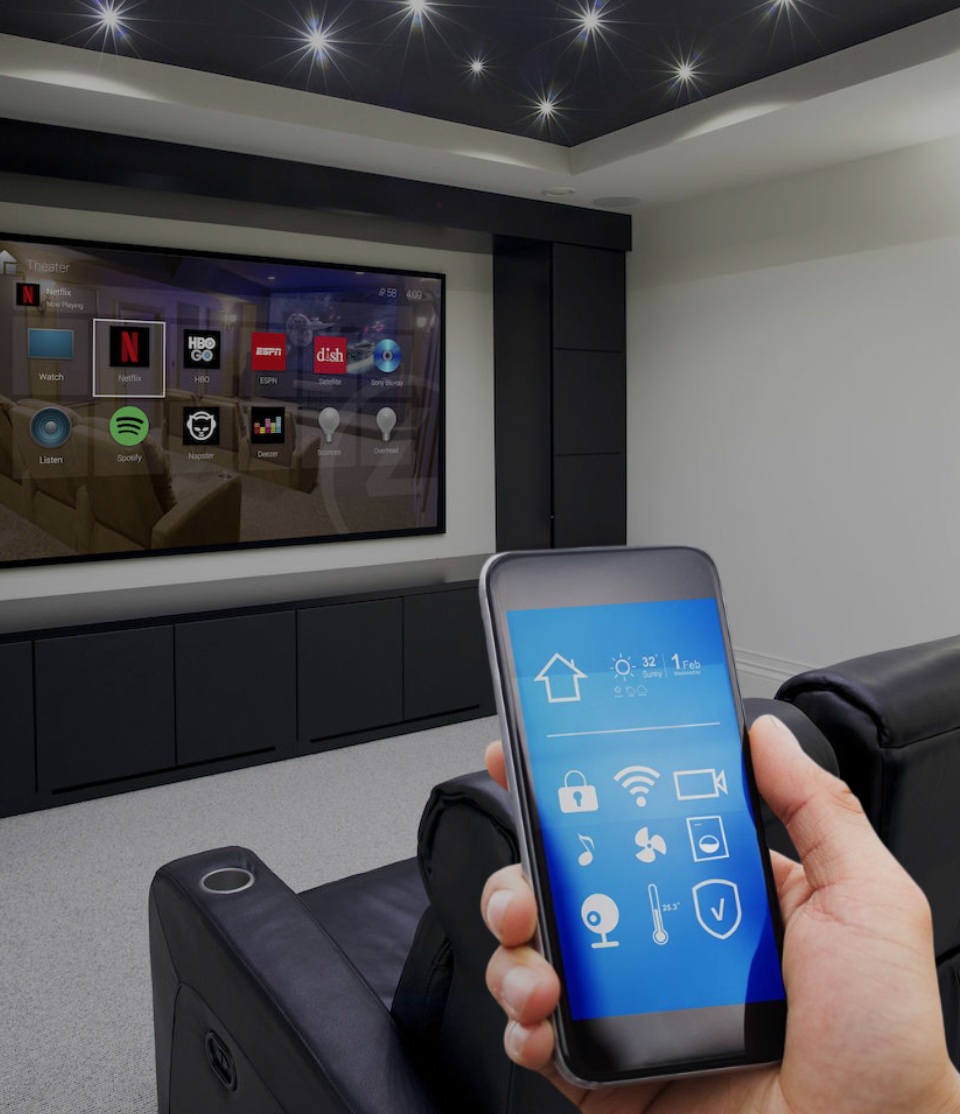
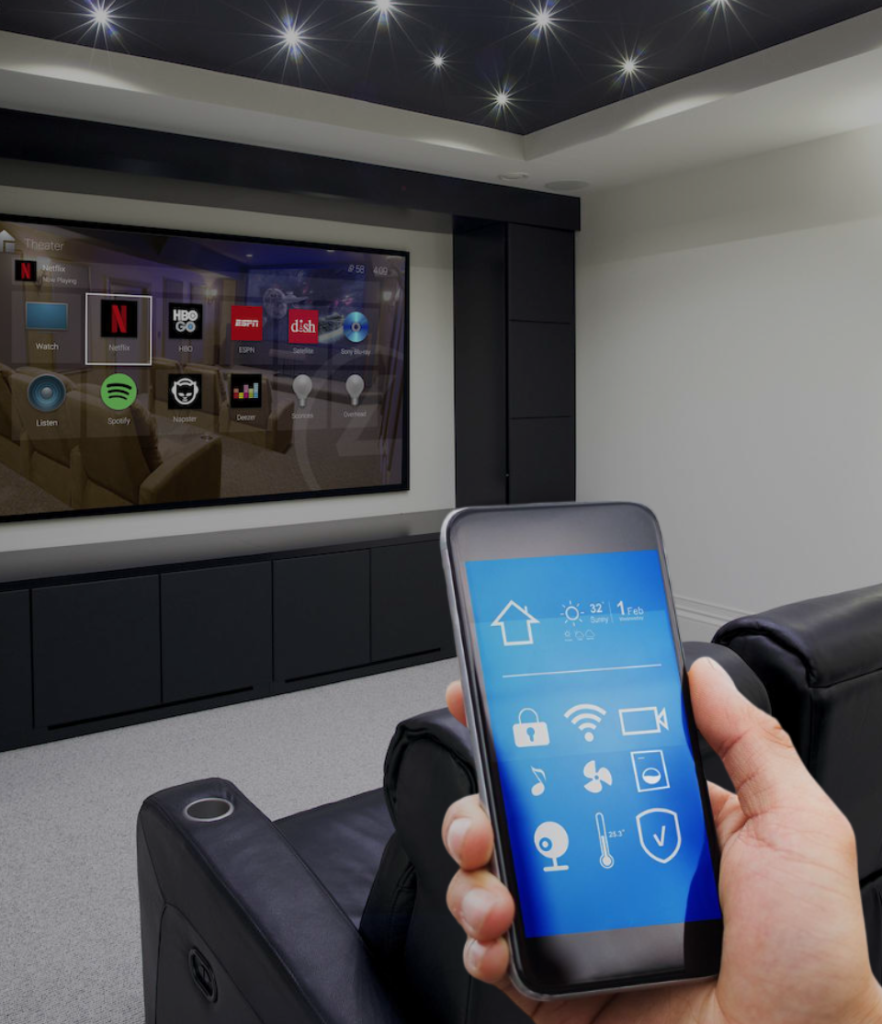
- Central control via touch panel or mobile app
The result?
A personalized cinema that prepares itself before the movie begins.
2. Why Home Automation Is a Game Changer for Home Cinemas
Let’s understand what makes automation such a powerful upgrade for home theaters.
2.1 Complete Ambience Control in One Tap
In a traditional home theater:
- You dim lights manually
- Close curtains manually
- Turn on the projector separately
- Adjust sound settings
- Set the AC temperature
- Turn off lights again
- Adjust seating position
With automation, one command does everything together.
Example:
Say “Movie Time” or tap a “Movie Scene” button.
Instantly:
- Lights dim or turn off
- Curtains close
- AC sets to the optimal temperature
- Projector turns on
- Screen lowers
- Surround sound system activates
- Seating reclines
This seamless transformation is what creates a truly cinematic atmosphere.
2.2 Perfect Lighting for Every Moment
Lighting is one of the most powerful elements in a cinema room. Automation allows lighting to adjust dynamically for:
- Pre-show ambience
- Movie watching
- Interval
- Post-movie relaxing
Automation lighting examples:
• Pre-Show Lighting
Soft warm lights glow, guiding people to their seats.
• Movie Mode
Lights fade gently to darkness—no harsh on/off effect.
• Pause Mode
Low-level floor lights turn on automatically when you pause.
• End Credits
Lights slowly brighten as the movie finishes.
This smooth lighting transition is impossible to achieve manually every time.
2.3 Smart AC and Climate Control
Home cinema rooms generate heat quickly because of:
- Amplifiers
- Projectors
- Multiple people
- Enclosed acoustic panels
Automation ensures comfort by:
- Maintaining ideal temperature
- Pre-cooling before the movie
- Auto-adjusting during long movies
- Monitoring humidity
With smart sensors, the room stays cool and fresh without manually fiddling with remote controls.
2.4 Automated Curtains & Blinds
Ambient light reduces picture quality drastically, especially for projectors.
Automation enables:
- Auto-closing curtains when projector turns on
- Light-blocking blinds for daytime shows
- Blackout mode for true cinematic darkness
- Integration with “Movie Scene”
Motorized curtains + blackout blinds make your cinema room feel professional.
2.5 Smart AV Integration: The Heart of Cinema Automation
Without AV integration, automation is incomplete.
A centralized control system can manage:
- Projector power
- AV receiver
- Screen lift
- Media players
- Smart TV
- Gaming consoles
- Streaming apps
- Subwoofers & amplifiers
- Apple TV / Fire Stick / Android TV
Instead of juggling 5 different remotes, you get one interface to control everything.
2.6 Voice Control for the Entire Theater
Voice commands add convenience and luxury.
Examples:
- “Alexa, start movie.”
- “Google, increase volume to 60%.”
- “Alexa, pause movie.”
- “Ok Google, set cinema AC to 22°C.”
No need to search for remotes in the dark.
2.7 Total Immersion Through Audio Automation
Dolby Atmos and DTS:X rely heavily on correct:
- Speaker calibration
- Equalization
- Room modes
- Sound profiles
Automation allows the system to auto-switch sound settings based on content:
- Dialogue clarity mode for movies with lots of conversations
- Bass boost mode for action films
- Music mode for concert videos
- Gaming mode for PlayStation/Xbox
This ensures you always experience audio the way it was meant to be heard.
2.8 Smart Seating & Recliner Automation
Luxury home cinemas now include automation even in seating:
- Motorized recliners
- Memory seating positions
- Seat vibration for action sequences
- Massage mode for long movies
- Auto-return to upright position
You can control seating with:
- Touch panel
- Mobile app
- Voice
- Scene presets
2.9 Safety & Convenience Through Sensors
Sensors make the room intelligent and safe:
- Motion sensors turn pathway lights on
- Smoke detectors integrate with alerts
- Heat sensors protect amplifiers from overheating
- Door sensors pause the movie when someone enters
Automation creates a smart environment, not just a room.
3. Automated Scenes: The Most Powerful Feature
Scenes combine multiple actions into one command.
Here are the most popular home cinema automation scenes:
3.1 “Movie Time” Scene
Automatically:
- Dims lights
- Closes curtains
- Turns on projector
- Lowers screen
- Activates Dolby Atmos mode
- Starts AC
- Sets recliners
- Turns on star ceiling
One tap → entire room transforms.
3.2 “Pause” Scene
- Lights brighten to 20%
- Audio mutes
- Curtains remain shut
- AC reduces fan speed
Perfect for snack breaks.
3.3 “End Credits” Scene
- Slowly brighten lights
- Raise screen
- Turn off projector
- Bring recliners to upright position
Smooth and cinematic.
3.4 “Gaming Mode” Scene
- Switch AV input to PS5/Xbox
- Adjust sound profile
- Increase brightness
- Cool the room
- Turn on ambient RGB lighting
Transforms your cinema into a gaming arena.
3.5 “Music Mode” Scene
- Switches to multi-room audio
- Turns on mood lights
- Adjusts bass
Great for parties or relaxation.
4. Automation Hardware Required for Home Cinemas
Let’s look at the devices that actually make automation possible.
4.1 Smart Lighting Modules
- Dimmers
- RGB controllers
- Smart downlights
- LED strip controllers
Brands: Philips, Wipro, Yeelight, Casambi, etc.
4.2 Motorized Curtains
- Track motors
- Roller blind motors
- Blackout blinds
4.3 Climate Control Automation
- IR blasters
- Smart thermostats
- HVAC modules
4.4 AV Integration Devices
- IR blasters
- RS-232 control modules
- IP control drivers
4.5 Smart Controllers
These are the brains of your system:
- Touch panels
- Mobile app
- Remote control
- Voice assistants
5. Benefits of Automating a Home Cinema
Here are the biggest advantages homeowners enjoy:
5.1 Unmatched Convenience
One button replaces:
- 8–12 remotes
- Manual adjustments
- Lighting changes
- Climate control
- Curtains
- Sound modes
Automation simplifies everything.
5.2 Superior Immersion
Your senses stay focused on the movie, not the room.
5.3 Professional Theatre Ambience
Your room feels like PVR Gold Class or IMAX Home.
5.4 Energy Efficiency
Automation ensures:
- AC shuts down when room is empty
- Lights turn off automatically
- Projector stays protected
5.5 Enhanced Aesthetics
Automation reduces switches, remotes, and clutter.
5.6 Increased Home Value
A well-integrated home cinema increases property value significantly.
6. Real-Life Scenarios: How Automation Changes the Experience
Let’s imagine a fully automated scenario:
You sit down in your cinema room.
You say: “Alexa, start movie.”
In 5 seconds:
- Curtains close
- Lights fade
- AC sets to 22°C
- Projector turns on
- Screen lowers
- Surround sound activates
- Your recliner adjusts
- Movie starts
This seamless transformation boosts immersion and comfort drastically.
Another scenario:
You pause the movie:
- Floor lights turn on
- Sound mutes
- Screen stays
- AC reduces fan noise
It feels natural, cinematic, and luxurious.
7. Future of Home Cinema Automation
The world is moving towards AI-based home cinemas.
Upcoming trends:
- Voice + gesture control
- AI-driven sound optimization
- Automated acoustic correction
- 8K smart projection with auto-calibration
- Intelligent room mood prediction
- Immersive LED wall displays
- Haptic feedback seating
Automation is not just an upgrade—it’s the future of entertainment.
8. Final Thoughts
Home automation transforms a regular home theater into a smart, luxurious, fully immersive entertainment space. It makes everything faster, easier, and more enjoyable. Whether it’s lighting, sound, climate, or seating—automation ensures your home cinema always behaves like a real professional theatre.
If you’re planning or upgrading a home cinema, integrating automation is no longer optional — it’s essential for the best experience.