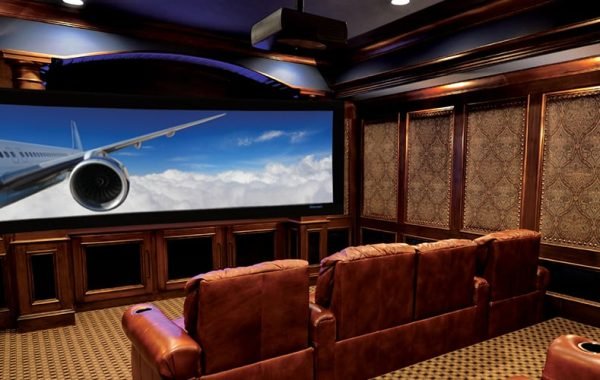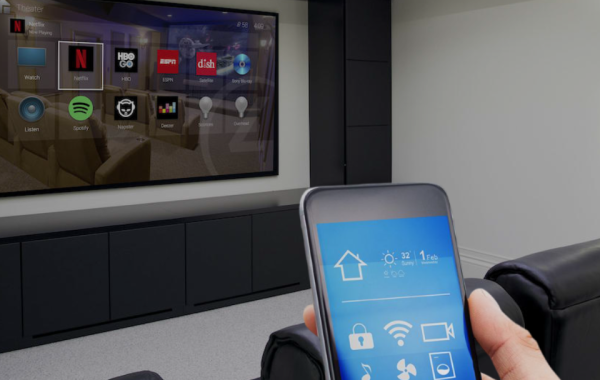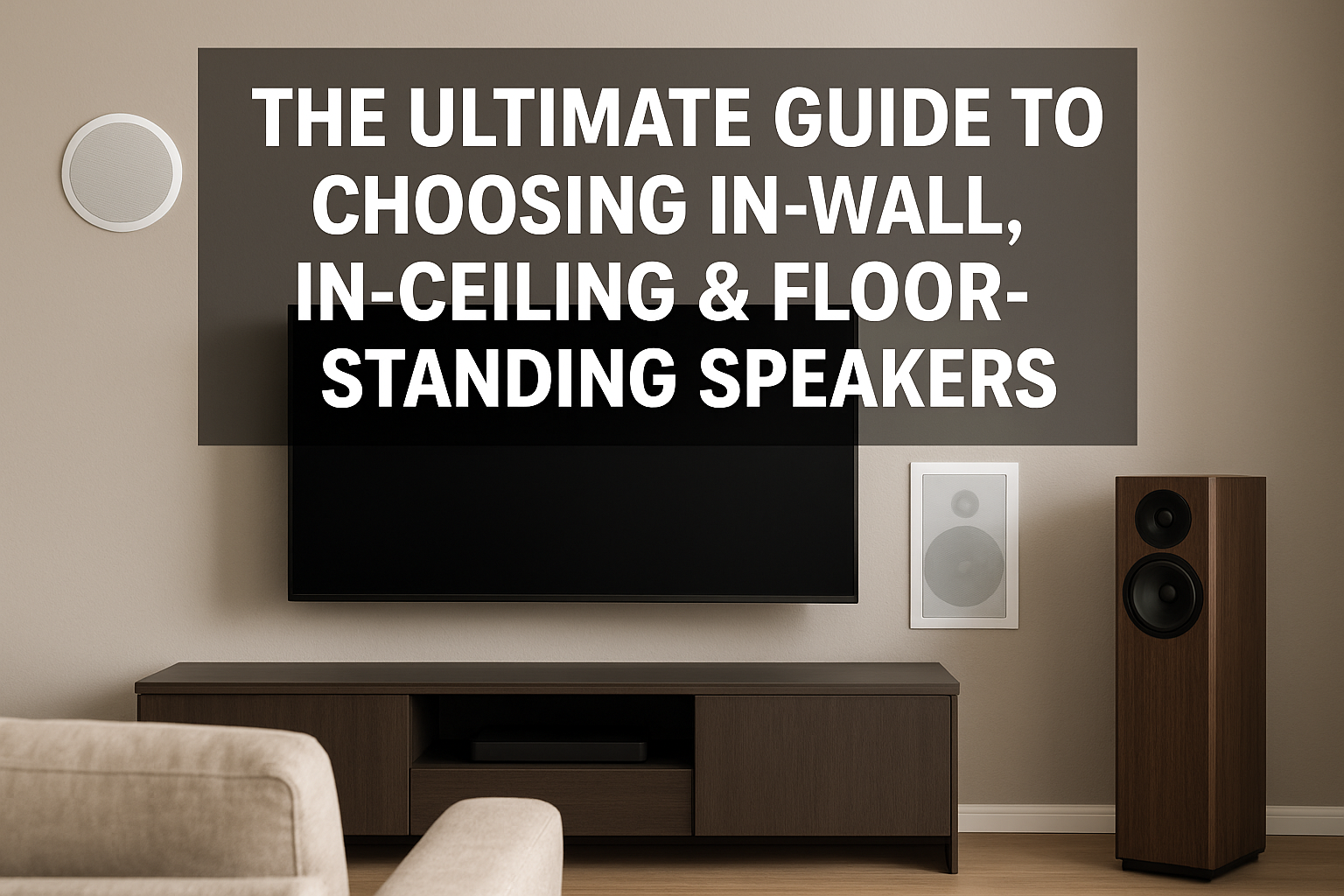

Designing the perfect home theater or media room is impossible without choosing the right type of speakers. While technology, amplifiers, and streaming platforms matter, the physical placement and type of speakers influence 70% of the total audio experience. Among the most debated choices are in-wall, in-ceiling, and floor-standing speakers.
Each category has its strengths, limitations, ideal use cases, and installation requirements. The decision becomes even more important when you’re designing for a dedicated theater, living room entertainment, multi-room audio, or luxury home automation projects.
This in-depth guide breaks down everything you need to know so you can confidently choose the right speaker type for your space.
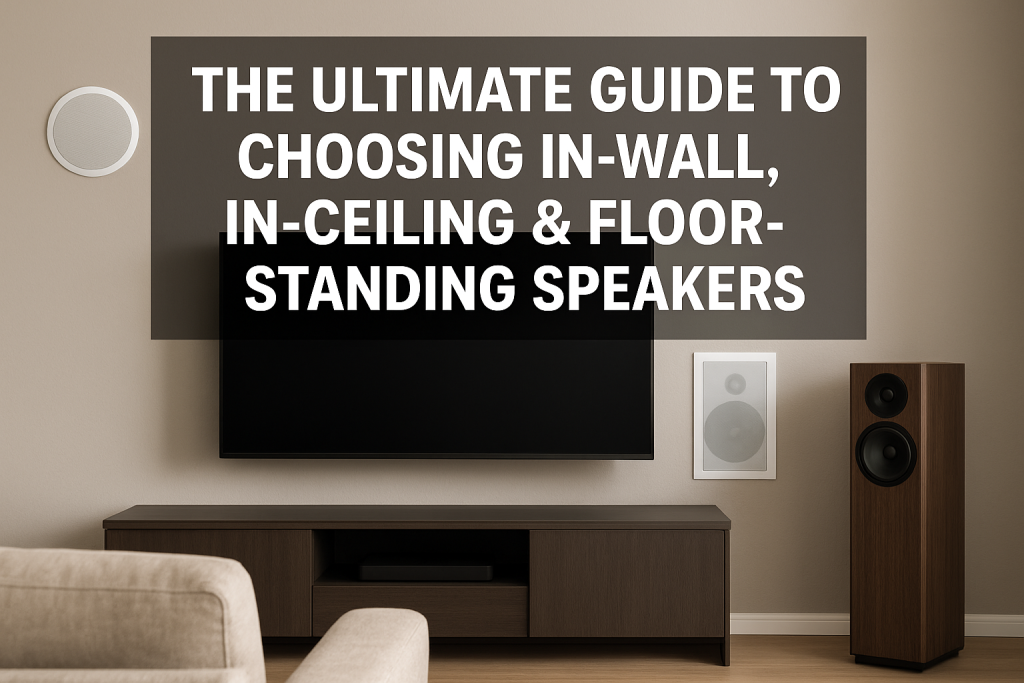
1. Understanding the Three Speaker Types
Before comparing, let’s understand each type.
1.1 In-Wall Speakers
In-wall speakers are built directly into the wall cavity. Only the front panel and grille remain visible, providing a clean, minimalistic look. They are often used for surround channels, left-center-right (LCR) in media rooms, and high-end stereo setups.
Key Characteristics
- Installed flush into the wall
- Hidden wires
- Great for media rooms, living rooms, and home theaters
- Saves floor space
- Supports larger drivers than in-ceiling speakers
1.2 In-Ceiling Speakers
Installed in the ceiling, these speakers deliver audio from above. They are widely used for Dolby Atmos height channels, multi-room audio, and ambient sound in smart homes.
Key Characteristics
- Installed overhead
- Works beautifully for Atmos (5.1.2, 7.1.4 etc.)
- Ideal for whole-home distributed audio
- Minimal visual presence
1.3 Floor-Standing Speakers
Also known as tower speakers, these deliver full-range sound with deeper bass and higher output. They are usually placed in front positions (Left and Right) for home theaters or as part of a high-fidelity stereo system.
Key Characteristics
- Free-standing, tall speakers
- Powerful bass and high output
- No installation needed
- Best for audiophiles and dedicated home theaters
2. Sound Performance Comparison
2.1 Bass Response
- Floor-standing speakers: Best bass performance due to larger cabinets and multiple drivers.
- In-wall speakers: Good bass but depends heavily on wall depth and installation quality.
- In-ceiling speakers: Weakest bass; better for mid/high frequencies.
2.2 Sound Dispersion
- In-ceiling speakers: Wide dispersion, good for whole-room coverage.
- In-wall speakers: Focused dispersion—ideal for front and surround channels.
- Floor-standing speakers: Controlled dispersion, optimized for seating area.
2.3 Volume & Output
- Floor-standing: Highest power handling
- In-wall: Medium to high (depends on size)
- In-ceiling: Moderate; not ideal for very loud rooms
2.4 Audio Accuracy
- Floor-standing speakers provide the most accurate, high-fidelity sound due to cabinet engineering.
- In-wall speakers are accurate but depend on wall structure.
- In-ceiling speakers offer the least accuracy for directional sound (except Atmos).
3. Aesthetics and Room Design
3.1 In-Wall Speakers — Best for Clean Walls
- Flush-fitting
- Paintable grilles
- No visible clutter
- Perfect for minimalist interiors
- Works well with luxury interior design themes
3.2 In-Ceiling Speakers — Practically Invisible
If you want great audio with zero visual footprint, in-ceiling speakers are unbeatable.
They blend seamlessly and don’t affect furniture layout.
3.3 Floor-Standing Speakers — Aesthetic Statement
Some homeowners love the look of large tower speakers. High-end models become a design feature.
But if you prefer a clean look, these may feel bulky.
4. Installation Requirements and Complexity
4.1 In-Wall Speakers
Installation difficulty: Medium to High
Requirements:
- Cutouts in drywall
- Proper wire routing
- Backbox (recommended for better bass and isolation)
- Structurally stable wall
- Accurate measurements
Best installed during construction or renovation
4.2 In-Ceiling Speakers
Installation difficulty: Medium
Requirements:
- Ceiling cutouts
- Routing wires through ceiling
- Space above the ceiling (loft/false ceiling)
- Correct spacing for Atmos
Ideal for:
- New homes
- False ceilings
- Smart home audio systems
4.3 Floor-Standing Speakers
Installation difficulty: Very Low
Plug and play:
- No drilling
- No cutting
- Easy upgrades
- Movable anytime
5. Cost Comparison
Floor-Standing Speakers
- Expensive upfront but provide the richest sound
- Requires additional space and stands (sometimes)
In-Wall Speakers
- Moderate price
- Installation adds cost
- Back boxes may be extra
In-Ceiling Speakers
- Usually the most affordable
- Installation adds cost
- Great for multi-room audio systems
6. Home Theater Use Cases
6.1 For Front Stage (LCR Speakers)
Best choice: Floor-standing or In-wall
- Floor-standing gives cinematic power
- In-wall gives clean look + wide front soundstage
In-ceiling should NOT be used for LCR for movies.
6.2 For Surround Speakers
Best choice: In-wall
- Creates an immersive side/rear surround field
- Clean wiring
In-ceiling works if walls aren’t available, but angle is crucial.
6.3 For Dolby Atmos Speakers
Only In-Ceiling Speakers
Dolby recommends overhead speakers for proper vertical imaging.
6.4 For Dedicated Home Theater Rooms
Ideal combination:
- Floor-standing or in-wall LCR
- In-wall surrounds
- In-ceiling Atmos
6.5 For Living Room Home Theater
Best combination:
- In-wall for front
- In-ceiling for surrounds
- Subwoofer + sound processing
7. Smart Home & Multi-Room Audio Use Cases
7.1 In-Ceiling Speakers
The best for:
- Living room background audio
- Kitchen area
- Bedrooms
- Bathrooms
- Walkways
- Large villas with multi-zone control
They blend perfectly with smart home platforms like Control4, Savant, Crestron, or Alexa-based systems.
7.2 In-Wall Speakers
Good for:
- Media rooms
- Bedrooms with mini home theaters
- Hallways with directional audio
- Wall-mounted TV setups
7.3 Floor-Standing Speakers
Good for:
- Audiophile stereo buildings
- Piano rooms
- Dedicated media rooms
Not ideal for smart home multi-room audio because they occupy space.
8. Pros and Cons Summary
In-Wall Speakers
Pros
- Clean look
- Good sound quality
- Perfect for surround channels
- Space saving
Cons
- More installation work
- Bass depends on wall structure
- Harder to upgrade
In-Ceiling Speakers
Pros
- Almost invisible
- Great for Atmos
- Great for whole-home distributed audio
- Affordable
Cons
- Not suitable for front LCR
- Limited bass output
- Harder to angle sound
Floor-Standing Speakers
Pros
- Best sound quality
- Easy to install and upgrade
- Excellent bass
- Ideal for audiophiles & dedicated theaters
Cons
- Takes space
- Visible in the room
- Costly
9. Which One Should YOU Choose? (Decision Guide)
Scenario 1: You Want the Best Home Theater Audio
Choose:
- Floor-standing LCR
- In-wall surrounds
- In-ceiling Atmos
Scenario 2: You Want a Minimalistic Living Room Setup
Choose:
- In-wall LCR
- In-ceiling surrounds
- In-ceiling Atmos
Scenario 3: You Want Whole-Home Audio
Choose:
- In-ceiling speakers in all rooms
- In-wall in large rooms
- Subwoofer zones where needed
Scenario 4: You Are an Audiophile
Choose:
- Floor-standing speakers
- Bookshelf speakers on stands
- High-quality center channel
Scenario 5: You Want a Budget-Friendly Setup
Choose:
- In-ceiling speakers (affordable models)
- One subwoofer
- AV receiver
10. Installation Tips for Best Performance
10.1 For In-Wall Speakers
- Use backboxes for deeper bass
- Avoid placing near doors or hollow areas
- Keep height at ear level
- Label wires
10.2 For In-Ceiling Speakers
- Use angled drivers for better sound direction
- Follow Dolby’s angle recommendations
- Keep away from ceiling fans
- Use fire hoods if required by building codes
10.3 For Floor-Standing Speakers
- Maintain proper distance from walls
- Toe-in for better imaging
- Use isolation pads
- Keep at least 2–3 feet from corners
11. Final Recommendation
Choosing speakers is not just a technical decision—it’s a design + acoustics + functionality choice. Think about your room layout, usage pattern, aesthetic preference, and how much you value audio quality.
A simple final summary:
- In-Wall = Best balance of clean look + great sound
- In-Ceiling = Best for Atmos & multi-room audio
- Floor-Standing = Best pure sound quality
For most users building a modern home theater:
**The perfect combination is:
In-Wall LCR + In-Wall Surrounds + In-Ceiling Atmos + Subwoofer**
This gives the cleanest look with the most immersive sound experience.
If you need assistance choosing the right in-wall or in-ceiling speakers, our team can guide you. Learn more at Dream Vision Automation Solution